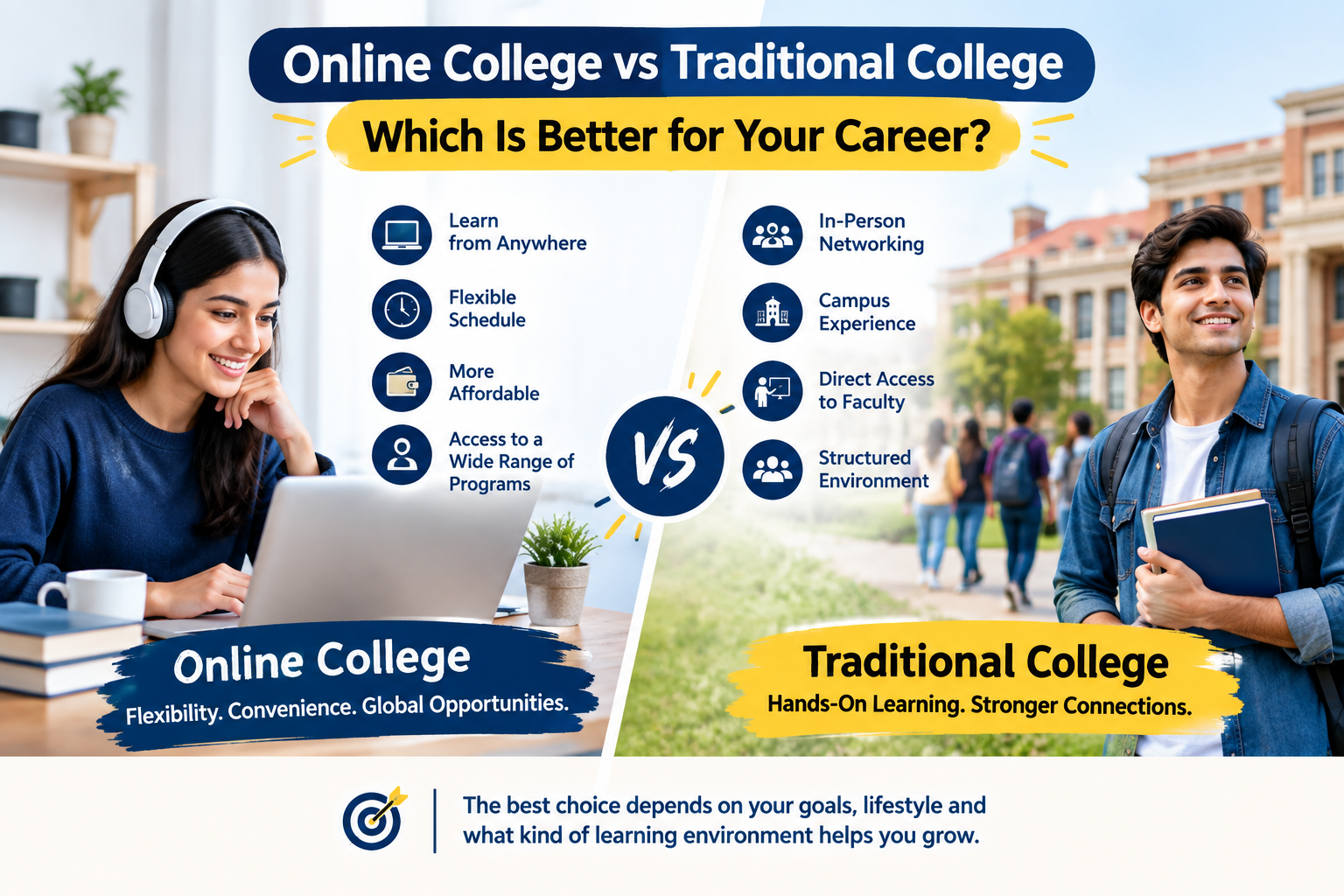
Online College vs Traditional College: Which Is Better for Your Career?
Choosing between an online college and a traditional college is an important decision for students planning their education and career. Both options offer different learning experiences, and neither is automatically better for everyone.
Traditional colleges provide face-to-face classes, campus experiences, direct interaction with faculty, and opportunities to build relationships with classmates. Online education offers flexibility, remote learning, and the ability to study while managing work or other responsibilities.
What Is Traditional College?
Traditional college generally refers to education where students attend classes physically at a campus according to a structured schedule.
- Attend face-to-face lectures
- Interact directly with faculty
- Participate in campus activities
- Use physical libraries and laboratories
- Work with classmates on projects
- Attend seminars, workshops, and student clubs
Traditional education provides a structured learning environment and regular interaction with teachers and other students.
What Is Online College?
Online college refers to academic programs delivered primarily through digital platforms. However, quality online education is not simply about watching recorded videos—it includes assignments, peer projects, faculty touchpoints, and academic support.
- Live online classes and recorded lectures
- Digital study materials and virtual discussions
- Online assignments and digital assessments
- Self-paced study from home or any preferred location
Online College vs Traditional College: Quick Comparison
| Factor | Online College | Traditional College |
|---|---|---|
| Flexibility | High | Usually limited |
| Location | Remote / Anywhere | Campus-based |
| Schedule | Often flexible | Usually fixed |
| Faculty Interaction | Online forums & calls | Face-to-face |
| Campus Experience | Limited | Strong & Immersive |
| Networking | Mainly digital | In-person + digital |
| Commuting | Zero | Daily commute required |
| Self-Discipline | Very important | Structured environment |
| Working While Studying | Easier to manage | Can be difficult |
10 Key Factors to Consider
1. Flexibility
Students can watch lectures on demand, manage their study schedule, and continue working without a daily commute.
Verdict: Online college is best for flexibility; traditional is better if you require a fixed daily routine.
2. Learning Experience
Traditional colleges offer real-time spontaneous discussions in a classroom. Online learning relies on digital LMS platforms, forums, and video calls.
Verdict: Traditional if you learn by face-to-face discussions; online if you are comfortable with self-directed digital study.
3. Networking Opportunities
Traditional campuses make it easy to bump into alumni, guest lecturers, and peers at fests and societies. Online networking requires proactive reach-outs on platforms like LinkedIn.
Verdict: Traditional college offers organic networking; online networking requires intentional effort.
4. Career and Placement Opportunities
Traditional campuses offer on-campus placement drives and physical interviews. Good online colleges provide career counselling, resume reviews, and virtual job fairs.
Check Before Enrolling: Which companies recruit? What are the verified placement statistics? Are internships provided?
5. Practical Learning
Hands-on fields like mechanical engineering, medicine, and wet-lab sciences require physical labs. Tech disciplines like programming, data science, and marketing translate directly to online delivery.
6. Cost of Education
Traditional colleges involve tuition plus hostel, travel, and campus living expenses. Online options eliminate living and commute costs, though tuition and exam fees still apply.
7. Work and Study Balance
Online education allows working professionals to maintain their income while upskilling. Campus attendance requirements make full-time work much harder.
8. Self-Discipline
Online learning requires consistent personal time management to complete modules on schedule. Traditional college provides built-in external discipline.
9. Campus Life
Fests, sports, and student societies build teamwork, leadership, and stage presence. Online college offers virtual communities, but cannot match physical campus life.
10. Technology and Digital Skills
Online students naturally master remote-work tools like LMS portals, video conferencing, and digital collaboration docs used in modern corporate environments.
Verification Reminder: For degrees in India, verify whether the institution and specific course hold valid UGC-DEB entitlement. Never rely solely on marketing claims.
Who Should Choose Which?
Choose Online College If You Are:
- A working professional looking to upskill without leaving your job.
- Balancing family responsibilities or needing flexible hours.
- Looking to avoid high accommodation and relocation costs.
- Disciplined with self-directed digital learning.
Choose Traditional College If You Are:
- A fresh 12th-grade graduate seeking an immersive campus life.
- Enrolled in fields requiring physical laboratories or workshops.
- Best suited to in-person instruction and scheduled peer study.
- Looking for a structured external routine.
Final Pre-Enrollment Checklist
- Curriculum matches current industry standards
- Accreditation and statutory approvals verified (e.g., UGC-DEB)
- Complete fee calculation (Tuition + Exam fees vs Living/Travel costs)
- Verified placement assistance and career support track record
- Compatibility with your individual learning style
Frequently Asked Questions
Yes. As long as the program is offered by an approved and entitled university (such as UGC-DEB in India), it holds parity with regular degrees for jobs and competitive exams.
Yes. However, traditional college is often recommended for fresh school graduates for social exposure and peer interaction, unless work, budget, or geography require remote study.
Yes. Online education is structured to support working professionals with asynchronous lectures and assignments that can be completed on weekends or evenings.
Speak with an Academic Advisor
Share your details and our counsellors will assist you with degree options, fees, and eligibility.